
Putting students first: School board candidates share visions for Pelican schools
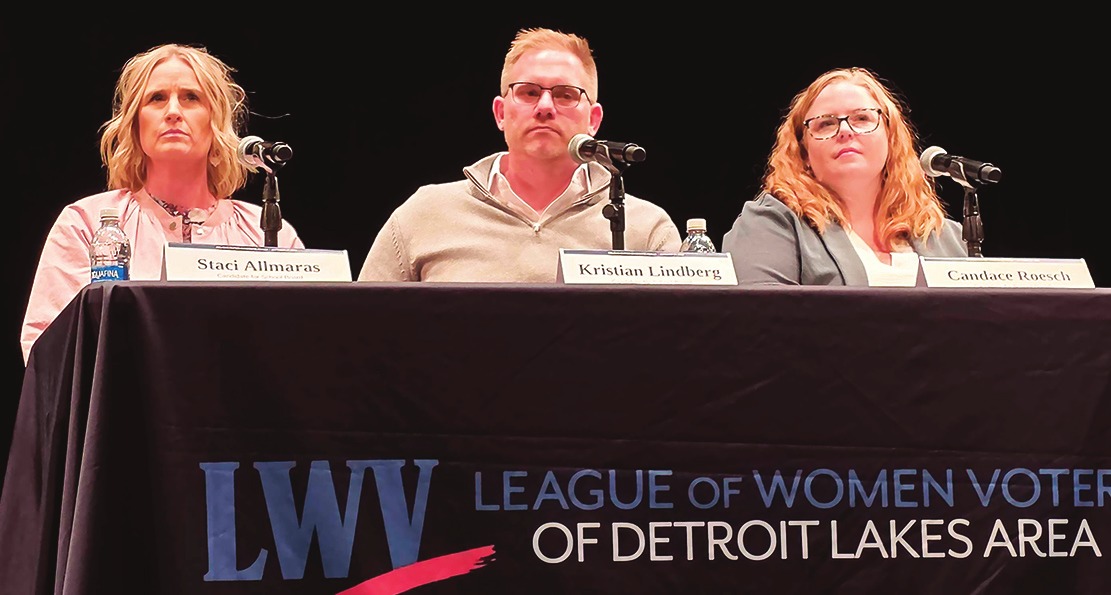
Student safety, cellphone rules, mental health, and inclusive education shaped the discussion among Staci Allmaras, Kristian Lindberg, and Candace Roesch at the Pelican Rapids School Board Forum. Their answers reflected broad agreement about students’ needs, with different approaches to meeting them. School Board candidate Eric Muckenhirn was not present.
What will you do to make sure each and every student feels safe, welcome, and known in our schools, including when problems like bullying come up between students and/or staff?
Roesch said inclusion must be evident in students’ daily experiences, not simply in district statements. She called for policies, resources, and school environments that clearly welcome marginalized and underrepresented students.
She also advocated a plainly communicated policy stating that no student or family would be “harassed, assaulted, or taken by a DHS agent” on school property. She emphasized taking bullying, harassment, and discrimination involving students or staff seriously and making reporting procedures clear.
Allmaras described safety as both building security and a sense of belonging. She cited Minnesota Student Survey findings from four years earlier indicating that only 35% of local young people felt cared about by adults in and around the community. She said those findings prompted work alongside students to address the issue.
She emphasized clear policies, reporting processes, support for staff and direct student input about safer learning environments.
Lindberg said students who feel unsafe cannot concentrate on learning. He distinguished the board’s responsibility for setting anti-bullying and anti-harassment policies from staff’s responsibility for daily discipline, stressing consistent enforcement.
He also linked belonging to extracurricular activities and community service, pointing to opportunities such as sports, speech, Knowledge Bowl, and food-shelf volunteering.
Phones, social media, and AI are changing how students learn and connect. In a district where many families speak languages other than English and rely on phones to translate and stay in touch. What should our policy on student technology look like?
The technology question highlighted both classroom distractions and multilingual families’ use of phones for translation and communication.
Lindberg supported phones being put away during instruction, noting that even a visible device can distract students. He favored access between classes for legitimate needs. He said his initial preference for a blanket prohibition changed as he learned more about those uses.
Allmaras said she opposed purely restrictive measures during policy-committee discussions because insufficient information had been gathered. She welcomed student input but wanted more family feedback. Her preferred approach balanced safety and learning concerns with consultation and consistent implementation.
Roesch supported putting devices away for most of the school day while teaching students to recognize problematic use. She emphasized that technology cannot replace human connection.
On AI, Lindberg favored ethical use to prepare students for work. Allmaras emphasized modeling responsible practices. Roesch advocated responsible, minimal use while preserving critical thinking and students’ own work.
Residents have asked for stronger support for student mental health and for recognizing each student's gifts and giving them a voice that matters. What would you prioritize to make that happen?
Allmaras prioritized meaningful student participation in interpreting data and developing solutions to challenges affecting them. She said attendance, engagement, and well-being require community-wide support, rather than placing every responsibility on schools.
Lindberg supported school-based resources and connections with county and regional organizations, agreeing that mental health is a shared community responsibility.
Roesch called for strong counseling services, early intervention, and trusted adults students can approach. She urged varied leadership opportunities and recognition of strengths in academics, agriculture, trades, arts, athletics and technology.
How important is it for you to make public education accessible to students with disabilities?
Asked about students with disabilities, Allmaras said “all means all” and challenged definitions of success centered on grades and standardized tests. Lindberg emphasized individual assessment, teacher expertise, and appropriate resources. Roesch stressed students’ access to school experiences alongside their peers.
How would you respond to a parent and/or student coming to you with concerns about staff?
All three said they would listen to families raising concerns about staff and involve administration. Lindberg described reinforcing concerns with the superintendent or principal; Allmaras emphasized established procedures; Roesch stressed transparency.
Diverse backgrounds, shared focus on students
Allmaras, seeking a second term, cited more than 25 years in education. Lindberg said he joined the board by appointment eight months earlier and brought nearly 20 years in finance and accounting. Roesch described six years working for the district, nine years providing licensed childcare, and experience teaching music.
In closing, Allmaras pledged student-centered, data-guided decisions and responsible resource management. Lindberg emphasized community input into five-to-ten-year planning and preserving diverse offerings. Roesch said education should develop curiosity and strengths, describing its purpose as “lighting a fire.”