
Pelican Rapids candidates discuss housing, immigration, economic development at forum
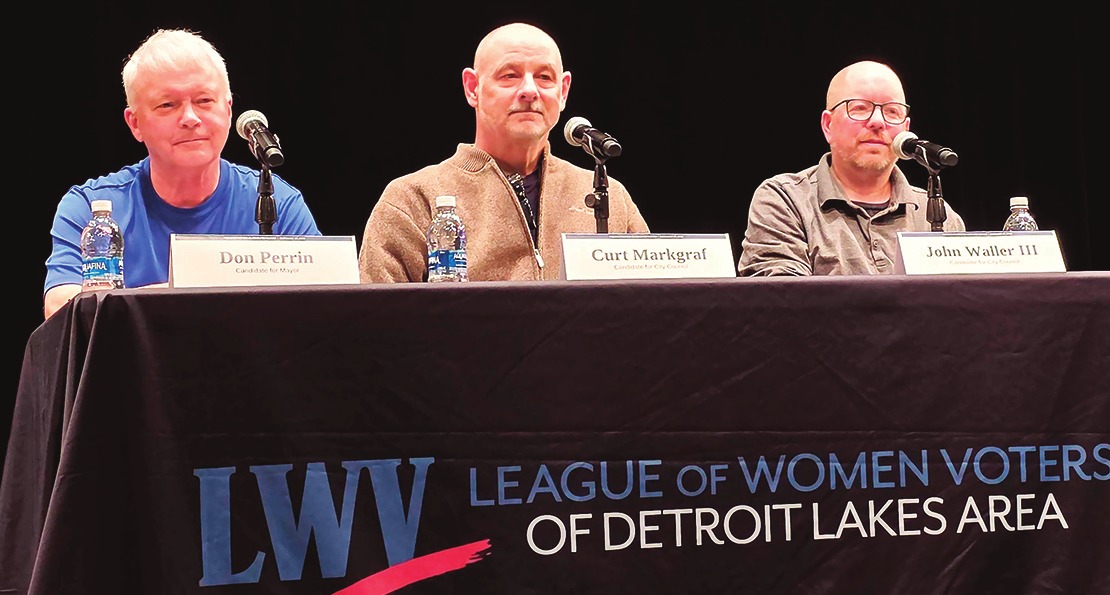
Housing affordability, rental inspections, and immigration enforcement were among the key issues discussed during a Pelican Rapids candidate forum ahead of the 2026 election. Mayoral candidate Don Perrin and city council candidates Curt Markgraf and John Waller III discussed economic development, community divisions, and whether the city should continue flying Minnesota’s former state flag.
Perrin, a current city council member, is the only mayoral candidate on the ballot. Markgraf, an incumbent council member, and Waller, a former council member who currently serves on the planning commission, are competing for two council seats along with Steve Strand, who did not attend the forum.
Although the three candidates generally agreed on the city’s challenges, they offered different approaches to addressing them.
Opening paths to homeownership
All three candidates identified affordable housing as a major concern, particularly for first-time homebuyers.
Perrin proposed working with landlords to establish contract-for-deed arrangements that would allow renters to purchase the homes they currently occupy. He said newly constructed homes can cost more than $300,000, making ownership difficult for families facing high interest rates and limited financing options.
Markgraf pointed to existing city efforts, including available building lots, county partnerships, and incentives offered through the Economic Development Authority.
Waller also supported development incentives but emphasized working with legislators and real estate professionals to reduce regulatory barriers that make housing more expensive.
Scrutinizing rental inspection enforcement
The candidates also addressed concerns about the city’s rental inspection program.
Perrin said inspections were necessary to protect tenants but questioned whether property owners were receiving enough time to complete required repairs.
He said the enforcement approach might be “a little too aggressive,” citing concerns about fines and potential court proceedings.
Markgraf called for clearer guidelines defining what housing inspectors can enforce. He said the city was already working to refine its procedures.
Waller emphasized oversight, saying the city administrator should ensure inspectors follow applicable laws. He also supported providing property owners and renters with written explanations of inspection requirements.
Easing deportation fears locally
Questions about federal immigration enforcement prompted discussion about residents missing work, school, and medical appointments because of deportation fears.
Perrin said he did not know how many undocumented people lived locally, or whether there were any. He rejected treating immigrants collectively as “bad people,” saying most were supporting families and participating in the community. He suggested helping people obtain legal status as a way to reduce fear, but did not identify a city program or legal pathway.
Markgraf said city officials had discussed the situation and emphasized that residents were welcome and appreciated. However, he said local officials could not interfere with federal immigration enforcement or override federal law. He emphasized reassuring residents while defining what he regarded as limits on municipal intervention.
Waller agreed with Markgraf’s characterization of federal authority, then offered the clearest examples of immediate assistance: grocery deliveries, transportation to medical appointments and other neighbor-to-neighbor help. He also supported the City helping people become legal citizens, echoing Perrin’s longer-term approach.
Finding common ground across divides
Asked how to bridge political divisions exposed by immigration enforcement and help every neighbor feel part of Pelican Rapids, their answers focused on interpersonal understanding and existing community activities rather than outlining a new formal city initiative, each emphasizing dialogue, with different approaches.
Waller said council members should approach disagreements as nonpartisan officials rather than through Republican or Democratic affiliations. He advocated calm conversations about residents’ problems and fears, urging people to understand one another rather than insist that “my way is the only way.”
Perrin said residents needed to understand each other and communicate their concerns. He acknowledged safety-related uncertainty that some residents associate with undocumented immigration, while suggesting many people occupy a “gray area in the middle” where they can find common ground and discuss concerns openly.
Markgraf agreed and identified fear, unfamiliarity, and misinformation as factors worsening divisions. He emphasized dialogue across ethnic backgrounds and pointed to the Friendship Festival, other community festivals, and library meals as opportunities for connection. He said COVID-19 had disrupted some of those activities and stressed that communication “goes both ways” among residents of all cultures.
Boosting downtown business growth
The candidates expressed support for continued economic development, particularly through the city’s Economic Development Authority.
Markgraf highlighted the city’s partnership with CEDA, which provides economic development expertise and assistance identifying grant opportunities. He cited 50/50 matching facade-improvement grants that he said had helped businesses improve downtown buildings.
Waller supported maintaining specialized development assistance, saying dedicated staff could research grants and funding opportunities that city administrators might not have time to pursue.
Perrin expressed concern that some available housing and business improvement grants were not being fully used. He also said businesses had faced difficulties during two years of street construction and suggested further promoting the city’s improved parks, pool, and recreational amenities to attract visitors.
Drawing young workers home
Candidates also discussed ways to encourage young people to return after leaving for college or employment.
Perrin highlighted opportunities in skilled trades and remote work, noting that residents could work for larger companies while living in Pelican Rapids.
Waller similarly emphasized remote employment and the area’s lakes, recreation, and quality of life as advantages over larger cities.
Markgraf said young people often leave to explore opportunities elsewhere but may eventually recognize the benefits of returning to their hometown.
Keeping old state flag flying
All three candidates supported continuing to fly Minnesota’s former state flag, although their reasons differed.
Perrin called the new flag “too boring” and said he would probably keep the old flag until a replacement was needed.
Markgraf and Waller’s primary objection was the selection process, arguing that voters should have been allowed to decide. Waller said the city should comply if legal requirements or financial penalties made switching necessary.
Despite marginal differences over specific policies, the forum revealed broad agreement on expanding housing opportunities, supporting businesses, and encouraging greater community participation in local government.